Eye Dieasese & Treatment
- Home
- Eye Dieasese & Treatment
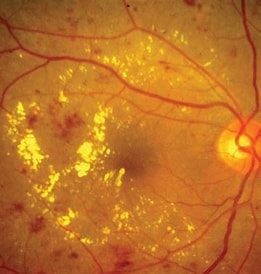
Retinal diseases are conditions that affect the retina, the light-sensitive layer at the back of the eye, leading to vision impairment or blindness if untreated.
When retinal diseases are severe or vision is at risk, surgical interventions are used to restore retinal function or prevent further damage. 1. Vitrectomy Most common retinal surgery Removes the vitreous gel, blood, or scar tissue Used for vitreous hemorrhage, retinal detachment, or advanced diabetic retinopathy 2. Retinal Detachment Surgery Scleral Buckling – a silicone band is placed around the eye to push the retina back Pneumatic Retinopexy – gas bubble is injected to reattach the retina Often combined with vitrectomy for complex detachments 3. Laser Surgery (Photocoagulation) Seals retinal tears or holes Prevents abnormal blood vessel growth in diabetic retinopathy or retinal vein occlusion Can reduce risk of retinal detachment 4. Macular Surgery Macular Hole Repair – vitrectomy with gas bubble to close hole in the macula Epiretinal Membrane Removal – peels scar tissue causing vision distortion 5. Cryopexy (Freezing Treatment) Used for retinal tears to adhere the retina to underlying tissue
Treatment depends on the type and severity of the retinal disease.
Anti-VEGF injections (e.g., ranibizumab, bevacizumab, aflibercept) – for diabetic retinopathy, wet macular degeneration
Steroid injections – reduce inflammation and swelling in the retina
Antibiotics or antivirals – for retinal infections
Focal laser photocoagulation – seals leaking blood vessels
Panretinal photocoagulation (PRP) – prevents growth of abnormal vessels
Laser for retinal tears – prevents retinal detachment
Vitrectomy – removes vitreous hemorrhage or scar tissue
Retinal reattachment surgery – scleral buckling, pneumatic retinopexy, or vitrectomy for retinal detachment
Macular surgery – repair of macular holes or removal of epiretinal membranes
Control diabetes, hypertension, and cholesterol
Quit smoking to reduce progression of macular degeneration
Regular retinal exams for early detection and timely intervention